If you want to know how to buy golf property in Spain, the process usually starts by setting your budget and choosing the right golf region, followed by property viewings, independent legal checks, signing the appropriate contracts and completing the purchase before a Spanish notary.
International buyers can purchase property in Spain, but it is important to use an independent Spanish lawyer, understand the taxes and ongoing costs, and check the individual golf resort as carefully as the property itself.
The best first step is to decide how you intend to use your home: holidays, permanent living, golf, rental income or a combination of these.
How Does Buying Golf Property in Spain Work?
For most international buyers, purchasing golf property in Spain is straightforward once the process is understood.
The property search itself is only one part of it.
Before completion, you will normally need to establish a realistic overall budget, decide which part of Spain suits you, arrange any required financing, carry out legal due diligence and complete the purchase through the Spanish legal and notarial system.
Golf properties also introduce a few additional questions that buyers of ordinary residential property may not immediately consider.
What are the community fees? Does ownership include access to resort facilities? Is golf membership separate? Can the property be rented if that is part of your plans? Is the resort active throughout the year?
A good purchase therefore requires you to assess both the home and the golf community around it.
1. Decide What You Want from Your Golf Property
Before looking at individual listings, decide why you are buying.
This sounds obvious, but it can dramatically improve your property search.
Are you looking for:
- a holiday home for several trips each year?
- somewhere to spend the winter?
- a permanent home in Spain?
- a property for golf holidays with family and friends?
- potential rental income when you are not using it?
- a longer-term lifestyle purchase for retirement?
The answer influences everything that follows.
A low-maintenance apartment beside the course may be ideal for somebody visiting six times a year.
A couple relocating permanently may prefer a detached villa close to supermarkets, healthcare and an established town.
And a serious golfer might prioritise having several courses nearby rather than simply living frontline to one.
Start with the lifestyle and the property shortlist becomes much easier.
2. Set Your Total Budget
The next step in how to buy golf property in Spain is establishing what you can comfortably spend.
Don’t base this only on the advertised property price.
Your budget should also account for purchase taxes, legal costs, notary and registration expenses where applicable, mortgage-related costs if financing the purchase, currency exchange where relevant and the ongoing costs of ownership.
Golf properties may also have community fees or resort charges, particularly where the development includes communal pools, gardens, security and other facilities.
If you are buying a villa, consider private pool and garden maintenance too.
The aim is to know your all-in budget before you fall in love with a property.
3. Choose the Right Part of Spain
Spain has many excellent golf destinations, but Camerons Golf focuses particularly on three regions: the Costa Blanca, Murcia/Costa Cálida and Costa del Sol.
Each suits a slightly different buyer.
| Region | Particularly Suited To | Typical Appeal |
|---|---|---|
| Costa Blanca | Buyers wanting a strong balance of golf, beaches and everyday amenities | Established communities, varied property and Alicante Airport access |
| Murcia / Costa Cálida | Buyers prioritising space, contemporary resorts and quieter surroundings | Coastal and inland golf with strong lifestyle variety |
| Costa del Sol | Buyers seeking extensive golf choice and a premium international lifestyle | Marbella, La Cala, Estepona, Benahavís and Sotogrande |
Don’t choose on reputation alone.
A buyer who starts by assuming Marbella is essential might find that La Cala provides more of the golf-focused lifestyle they want.
Someone researching the Costa Blanca may discover that a modern villa in Murcia gives them considerably more of the space they value.
Our guide to the best areas for buying a golf property in Spain is a useful starting point if you’re still comparing regions.
4. Decide Between Resort Living and Living Near Golf
You do not necessarily need to live on a golf course to enjoy an excellent golf lifestyle in Spain.
This is an important distinction.
A dedicated golf resort can offer landscaped surroundings, security, communal facilities and immediate access to the course.
For some buyers, that’s exactly the experience they want.
Other buyers are happier living five or ten minutes away, perhaps closer to the beach, restaurants or a town while still having several courses nearby.
Ask yourself:
- Do I want to walk or drive to the golf club?
- How important are frontline golf views?
- Will non-golfers use the property regularly?
- Do I want restaurants and shops within walking distance?
- Would I prefer access to several courses rather than one home course?
There is no correct answer. There is simply the version that fits your life best.
5. Shortlist Properties Before Your Viewing Trip
Once your region and budget are clear, start narrowing the search.
This is where working with a specialist golf property agent can save a considerable amount of time.
Rather than viewing ten properties that happen to fit your bedroom and price requirements, the aim should be to compare homes that fit the way you want to use them.
For example, you might decide you want:
- a minimum of two bedrooms;
- a south- or west-facing terrace;
- a communal pool;
- the beach within 15 minutes;
- no more than 45 minutes from the airport;
- a golf course nearby;
- restaurants within a short drive;
- manageable community fees.
That level of detail makes the shortlist considerably more useful.
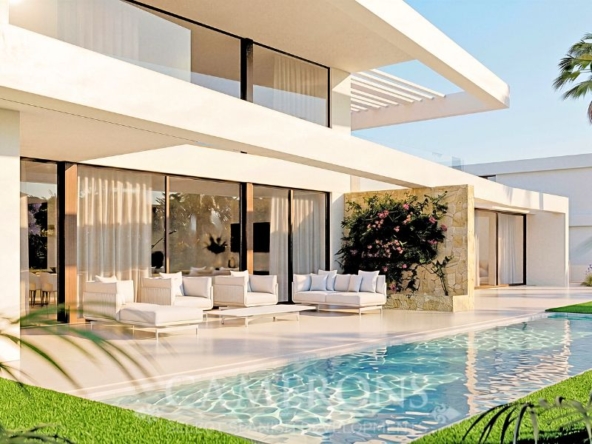
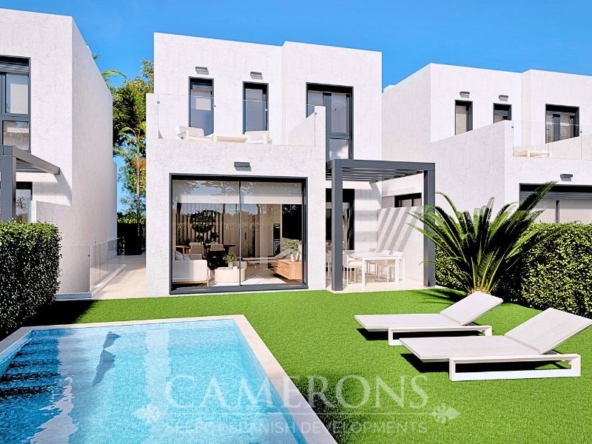
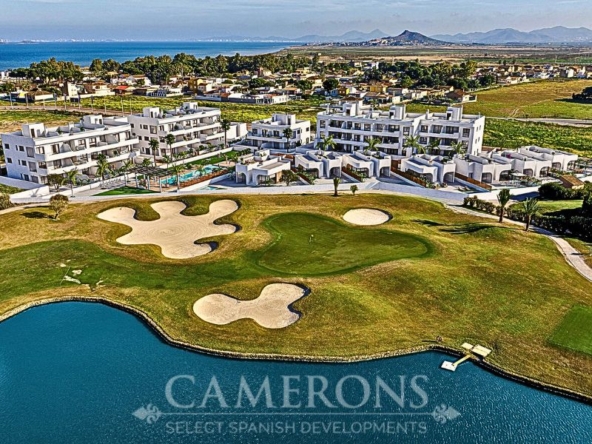
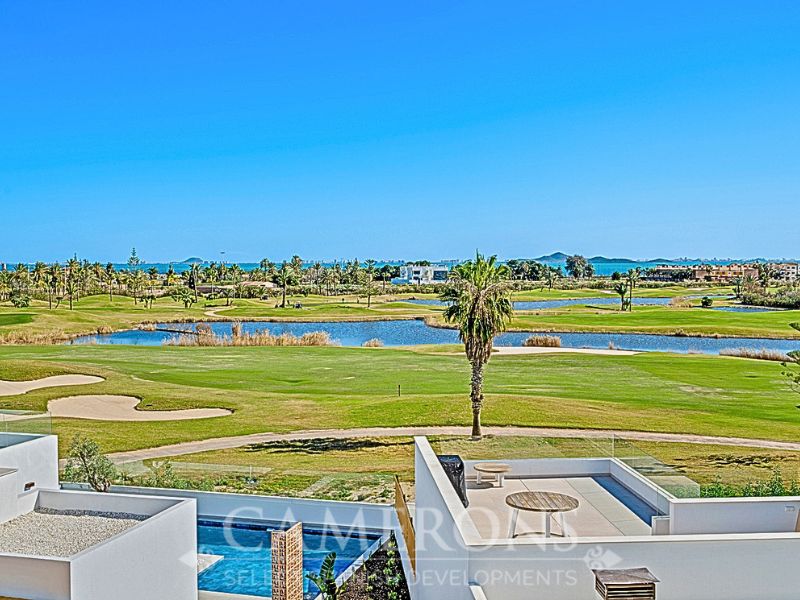
Camerons Golf has current properties ranging from apartments at Roda Golf in Murcia to contemporary villas at Vistabella Golf on the Costa Blanca, illustrating how varied the golf market can be.
6. View the Area, Not Just the Property
A golf property can photograph beautifully and still be in the wrong location for you.
During a viewing trip, leave time to experience the wider area.
Drive from the property to the supermarket.
Visit the nearest beach.
Have lunch in the local town.
Check the journey to the airport.
Spend time around the resort in the evening rather than only when the golf club is busy.
These small exercises tell you far more about living there than another ten minutes walking around the villa.
Local Insight from Camerons Golf
Buyers often change their shortlist once they experience different golf communities in person.
Someone may arrive wanting a frontline property and discover that they prefer being closer to restaurants and the coast.
Another buyer may think they need a lively coastal location, then fall in love with the privacy and open space of an inland resort.
That is why we prefer showing buyers contrasting locations, rather than simply presenting variations of the same type of development.
The right golf property is usually the one where the wider lifestyle makes sense too.
7. Make an Offer and Understand What You Are Signing
Once you have chosen a property, the next stage is usually agreeing the price and terms.
The exact sequence can vary according to the transaction and whether you are buying a resale property or a new development.
You may be asked to sign a reservation document or other preliminary agreement and pay a reservation amount.
Before committing significant funds or signing binding documentation, make sure your independent lawyer understands the transaction and has advised you appropriately.
Don’t assume that a document described as “standard” requires no scrutiny.
Your lawyer represents your interests, which is why independent legal advice is so important.
8. Appoint an Independent Spanish Lawyer
An independent lawyer is one of the most important people involved in your purchase.
Their role normally includes checking the property’s legal position and advising you on the contracts, taxes and completion process.
Spain’s official government guidance specifically recommends verifying the property’s legal status, ownership and any registered charges before buying. This information can be checked through the Property Registry, including through a nota simple.
Depending on the property and transaction, your lawyer may investigate matters such as:
- registered ownership;
- mortgages, debts or other charges;
- planning and property documentation;
- community-related information;
- contractual terms;
- applicable taxes;
- completion documentation.
For new-build property, the checks and contractual structure may differ from a resale purchase.
This is an area where personalised legal advice matters far more than a generic online checklist.
9. Obtain Your NIE and Complete the Necessary Administration
Foreign buyers normally require a Spanish NIE — Número de Identidad de Extranjero — for property-related and tax procedures in Spain.
Your lawyer or adviser can explain the appropriate process for obtaining one and which other administrative steps apply to your circumstances.
It is sensible to address this early rather than waiting until the final stages of the purchase.
You may also decide to open a Spanish bank account, particularly if you will have regular local expenses such as utilities, community fees and property taxes.
Your lawyer can advise on what is necessary for your transaction.
10. Arrange Your Mortgage Early If You Need One
If you intend to finance the purchase, investigate mortgage options before making your final property choice.
Don’t rely on a generic assumption that every non-resident buyer will automatically receive a particular loan-to-value percentage.
Mortgage lending depends on factors including your income, existing commitments, residency status, the property and the lender’s own criteria.
An agreement in principle or early affordability assessment can help you understand your realistic price range before viewing.
Remember to consider the monthly mortgage alongside community fees, local taxes, insurance and general running costs.
11. Complete the Legal Checks
Before completion, your lawyer should carry out the checks appropriate to your purchase and make sure you understand the transaction.
The Spanish Property Registry can provide details about registered ownership and rights or charges attached to the property.
For golf property, there are also practical questions worth raising.
Ask about community fees and whether there are outstanding amounts.
Understand any community rules.
Clarify whether golf membership comes with the property or is entirely separate.
If rental income is part of your plan, check the regulations and community position before buying.
And if the property is new-build, understand what is included within the specification and when payments become due.
12. Sign the Purchase Contract and Prepare for Completion
Once the legal position is satisfactory, you move towards the binding purchase stage and completion.
The exact documents and timing depend on the transaction, so follow your lawyer’s advice rather than treating every Spanish purchase as identical.
You will need to ensure funds are available when required and, where money is being transferred from another currency, plan the exchange and transfer carefully.
Large exchange-rate movements can materially affect the final cost of a property, so international buyers should consider this when setting their budget rather than leaving currency arrangements until the last moment.
13. Complete the Purchase at the Notary
The final purchase is normally formalised through the signing of the public deed of sale before a Spanish notary.
After completion, the transaction is dealt with through the relevant tax and registration processes so that the buyer’s ownership can be registered.
Spain’s government guidance explains the role of notaries and the Property Registry within the property-purchase process and recommends checking the property’s legal status before purchase.
Your lawyer should explain what happens on completion day and what remains to be dealt with afterwards.
Then comes the considerably more enjoyable part: getting the keys.
How Much Does It Cost to Buy Golf Property in Spain?
There is no single percentage that accurately describes the purchase costs of every Spanish property.
The amount depends partly on whether you are buying a new-build or resale and where the property is located.
For example, in Andalucía, the current general transfer-tax rate for many resale property transactions is 7%. New residential property is generally subject to 10% VAT, with AJD also applying to qualifying new-build transactions; Andalucía’s general AJD rate is currently 1.2%.
Other autonomous communities can apply different transfer-tax and AJD rates.
You may also need to budget for items such as:
- legal fees;
- notary and registration costs;
- mortgage-related expenses where applicable;
- valuation costs if financing;
- currency-transfer costs;
- initial community and ownership expenses.
Rather than publishing or relying on a universal “10–14% rule”, ask your lawyer for a detailed purchase-cost illustration based on the specific property, region and buyer circumstances.
That gives you a figure you can actually plan around.
What Are the Ongoing Costs of Owning a Golf Property?
Your financial planning shouldn’t stop at completion.
Depending on the property, ongoing costs may include community fees, local property taxation, insurance, utilities, pool and garden maintenance and general repairs.
Golf resort fees vary considerably.
A development with security, extensive gardens, several communal pools and other shared facilities will naturally have different costs from a small residential community.
Golf membership should also be treated separately unless you have confirmed it is included in a particular ownership arrangement.
Before buying, ask for a clear picture of annual running costs so you can compare properties properly.
Buying New-Build vs Resale Golf Property
Both have advantages.
New-build golf property often appeals to buyers looking for contemporary design, energy efficiency, large terraces and modern communal facilities.
It can also allow you to choose from several units within the same development.
However, you need to understand construction timescales, payment stages, specifications and exactly what is included.
Resale golf property lets you see exactly what you are buying and often means the surrounding community is already established.
You may also be able to assess existing community fees and get a better sense of what the resort feels like throughout the year.
Neither is automatically better.
The right choice depends on your priorities and timescale.
Is Buying Golf Property in Spain a Good Investment?
It can be, but we would not recommend buying solely on broad promises of rental yields or capital growth.
Golf can increase a property’s appeal to a specific international audience, especially in established destinations.
But performance ultimately depends on the individual home.
Location, condition, views, resort quality, accessibility, ongoing costs and supply all matter.
If rental income is part of your plan, investigate realistic income and operating costs and establish whether short-term letting is permitted before buying.
A property that you genuinely want to own and use is usually a much stronger starting point than one purchased purely because somebody described it as an “investment opportunity”.
Common Mistakes to Avoid
Most buying mistakes are avoidable.
Don’t choose the property before deciding on the area.
Don’t calculate your budget using the purchase price alone.
Don’t assume every golf resort offers the same facilities or year-round atmosphere.
Don’t assume every property can legally be used for holiday rentals.
Don’t sign important documentation without understanding it.
And don’t skip independent legal advice simply because the property is new-build or the development looks impressive.
A little more work before buying can make ownership considerably more enjoyable afterwards.
Why Buy with Camerons Golf?
Camerons Golf specialises in golf property across the Costa Blanca, Murcia/Costa Cálida and Costa del Sol.
Our role is to help you with the property side of the decision while making sure the search reflects how you genuinely intend to live in Spain.
That means understanding whether you want frontline golf or simply courses nearby, whether beaches matter, how often you’ll travel through the airport and what partners, friends or family need from the location.
Camerons Golf also works with buyers throughout the acquisition journey and can help connect clients with relevant professional services while independent legal professionals handle the areas requiring specialist legal advice. Camerons describes its service as supporting clients from their first enquiry through to moving into their Spanish home.
Explore golf property for sale in Spain or contact Camerons Golf to discuss your plans.
FAQs About How to Buy Golf Property in Spain
Can foreigners buy golf property in Spain?
Yes. International buyers can purchase property in Spain. You do not need to be a Spanish citizen to own a home, although foreign purchasers have administrative, tax and identification requirements to complete as part of the transaction.
Do I need to be resident in Spain to buy property?
No. You can purchase Spanish property as a non-resident. Buying a property and obtaining Spanish residency are separate matters, so owning a home does not automatically give you residency rights. Take appropriate immigration advice if relocating permanently is part of your plans.
Do I need a Spanish lawyer when buying?
Using an independent Spanish lawyer is strongly recommended. Your lawyer can review contracts, check the property’s legal position, advise on taxes and oversee the legal aspects of completion. The Property Registry provides important information about ownership and registered charges, but your lawyer should interpret the transaction for you.
What is an NIE?
The NIE is the identification number used for foreigners in Spain for numerous official and financial procedures. Property buyers commonly need one as part of the purchasing and tax process. Your lawyer or adviser can explain how and when to apply based on your circumstances.
How long does buying property in Spain take?
There is no fixed timescale. It can depend on whether the property is resale or new-build, whether you require a mortgage, how quickly legal checks are completed and what completion date the parties agree. Ask your lawyer and agent for a realistic timeline once you have selected a specific property.
Can I get a mortgage to buy golf property in Spain?
Potentially, yes. Spanish lenders offer mortgages to qualifying buyers, including non-residents, but lending criteria and maximum loan amounts vary. Obtain an affordability assessment early if financing is essential rather than choosing a property first and investigating the mortgage afterwards.
Should I buy new-build or resale property?
New-build property can offer contemporary specifications and modern communal facilities, while resale property allows you to see the completed home and established surroundings immediately. Taxes and purchase arrangements can also differ, so compare the total transaction rather than the advertised property price alone.
Can I rent out my Spanish golf property?
Possibly, but don’t assume that every property can automatically be used for holiday rentals. Regulations differ between regions and localities, and community rules may also be relevant. If rental income is important, have the position checked before you purchase.
Do I need golf membership if I own property on a golf resort?
Not necessarily. Property ownership and golf membership are often separate. Some developments may offer owner benefits or specific arrangements, while others do not. Ask exactly what is included rather than assuming purchasing beside a course automatically gives you playing rights.
What should I look for on a golf resort?
Look beyond the course. Consider the community fees, facilities, security, year-round activity, restaurants, shops, nearby towns, beaches, healthcare and airport access. Also ask whether the community feels right for permanent living, holidays or whichever way you intend to use the property.
Which part of Spain is best for golf property?
The Costa Blanca, Murcia and Costa del Sol all offer excellent options. The Costa Blanca is a strong all-rounder, Murcia offers appealing coastal and inland resort choices, and the Costa del Sol has an exceptionally established golf and international lifestyle market. Your budget and lifestyle should determine the winner.
Final Thoughts
Understanding how to buy golf property in Spain makes the whole process considerably less daunting.
The key is to make the decisions in the right order.
First decide how you want to use the property. Then set the total budget, compare the regions, visit suitable golf communities and narrow down the individual homes.
Once you have found the right property, use independent professional advice and make sure the legal and financial details are properly understood before completion.
Buying a home in Spain should be exciting.
A structured process simply helps ensure the excitement comes from choosing your new golf property — rather than discovering surprises later.